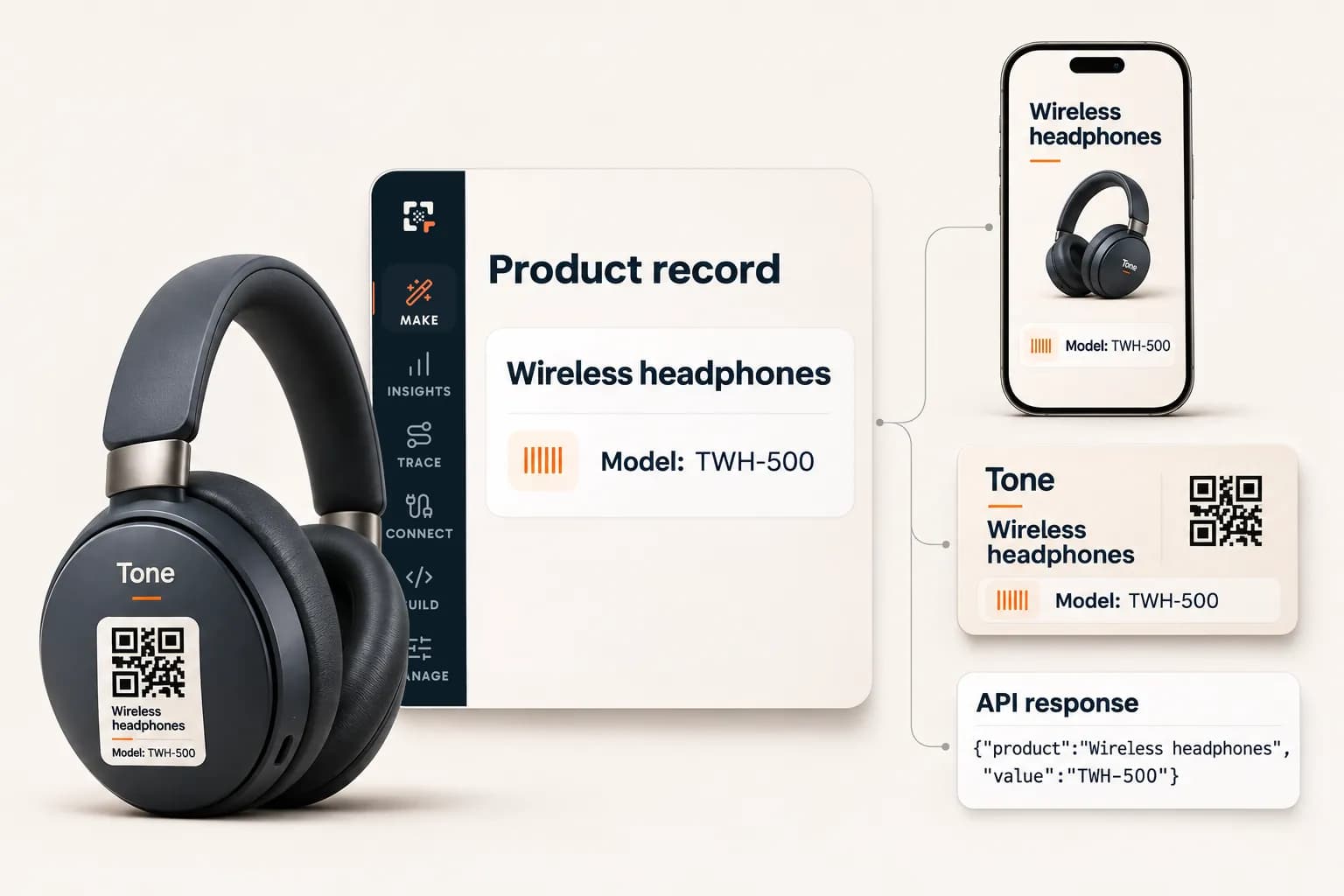
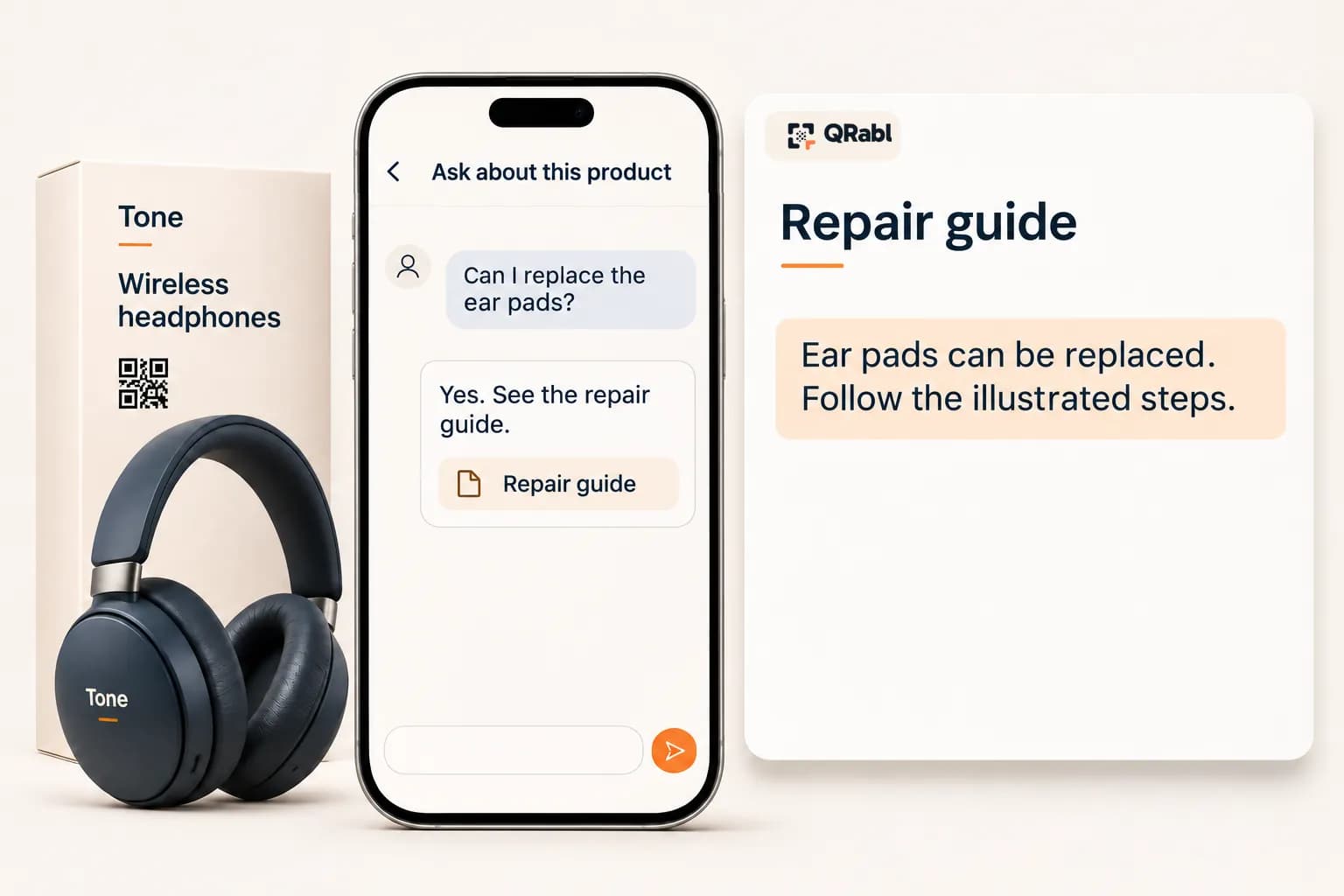
Electronics and ICT: product data behind one code
No EU passport applies to electronics yet. Collect the data the rules will ask for, and publish it behind one QR code today.
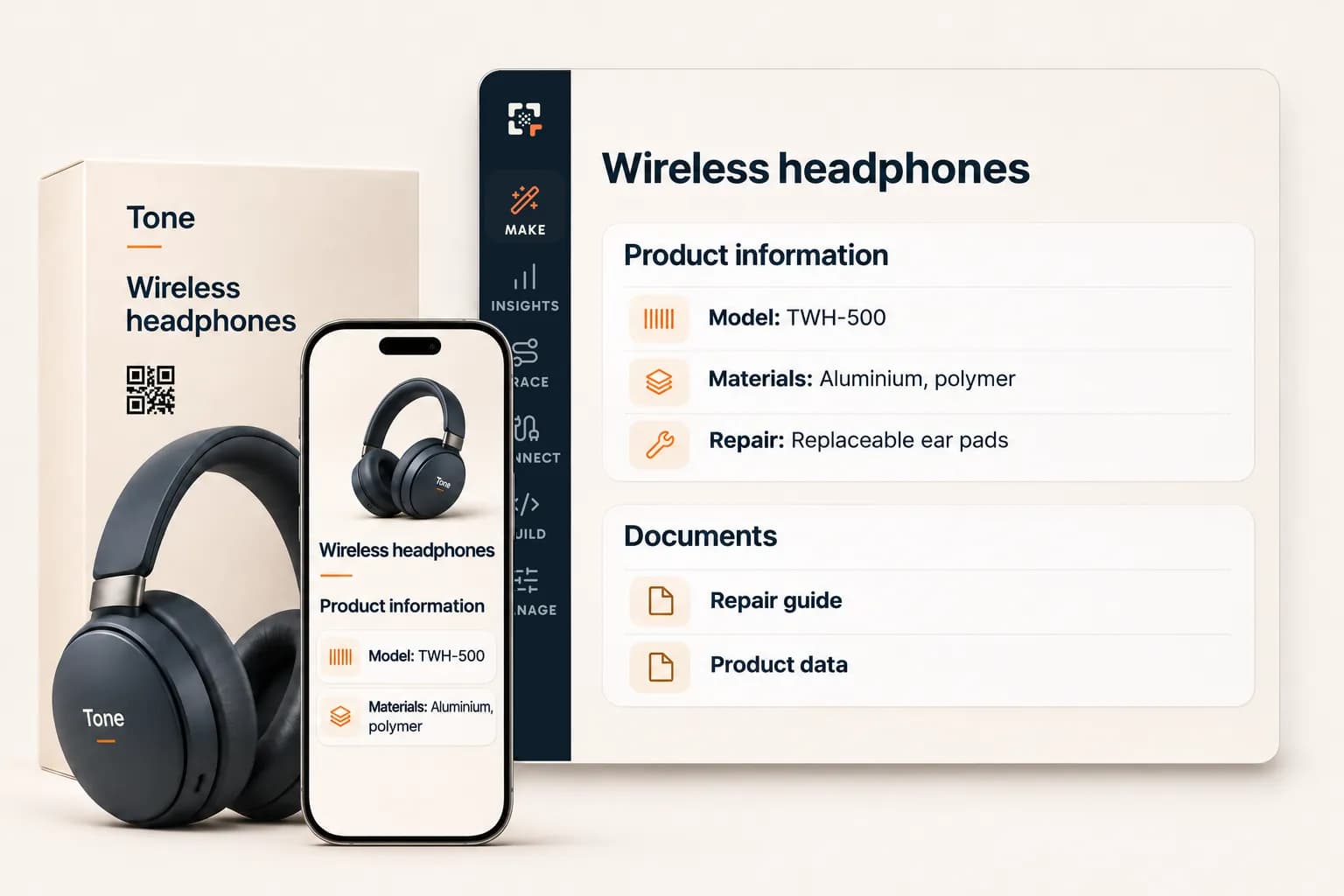
Electronics compliance pack
Fields for energy class and consumption, repairability, durability, spare parts, software updates, recycled content, materials, carbon footprint, the declaration of conformity and substances of concern.
Electronics passport view
Six sections: general information, substance declarations, energy, repairability and parts, recycled content and carbon footprint, and end-of-life information.
Checks before publishing
QRabl checks substances, energy class and end-of-life data before a passport goes live. Errors block publication; warnings are shown.
Restricted fields for professionals
Recyclers, repairers and authorities see more than the public view, after they verify their role.
Evidence vault
Keep declarations of conformity, test reports and supplier declarations with each product.
Circularity actions
RoadmapA repair and spare-parts card, a return-and-recycle card, lifecycle events recorded by professionals with a PIN, and ownership transfer for second-hand products.
Who this is for
This page is for manufacturers and brands of electronic and ICT products, importers who place them on the EU market, and the consultancies, integrators and label printers who work for them. If you serve electronics clients, see the partner programme.
Where the rules stand
No EU Digital Product Passport applies to electronics yet. The ESPR, Regulation (EU) 2024/1781, works product group by product group, through delegated acts. The Commission's ESPR working plan 2025–2030, adopted in April 2025, is a work plan, not a law. It names repairability rules for products such as consumer electronics and recyclability rules for electrical and electronic equipment. On the Commission's indicative timeline, the delegated acts for ICT products are expected in 2029.
Under the ESPR, businesses get no less than 18 months after a delegated act enters into force before its requirements apply, unless the act justifies a shorter period. Dates for all sectors are on the regulations timeline.
This is a summary, not legal advice. Check the rules for your products with your compliance adviser.
Why prepare now
The data a passport will ask for sits in many places: the product team, the supplier, the test lab and the service department. Collecting it takes time, whatever the final field list turns out to be. Starting with the data you already hold lets you find the gaps early, one product line at a time.
What you can use now
These parts of QRabl work for electronics:
- The electronics compliance pack. Fields for product name and model, unique identifier, manufacturer, economic operators, energy efficiency class and consumption, repairability score, durability and expected lifetime, spare parts availability, software and firmware update period, recycled content, material composition, carbon footprint, the EU declaration of conformity and substances of concern, plus a disassembly and recycling guide.
- The electronics passport view. Six sections: general information, substance declarations, energy class and power consumption, repairability and parts availability, recycled content, raw materials and carbon footprint, and end-of-life information. Each section names the rule it comes from, such as the RoHS Directive 2011/65/EU, the WEEE Directive 2012/19/EU and the Energy Labelling Regulation (EU) 2017/1369.
- Checks before publishing. QRabl checks the substance declarations, the energy class and the end-of-life information when you publish. Errors block publication. Warnings are shown to you and do not block it.
- Public view and verified professionals. The public sees the product facts, such as energy class, repairability and recycled content. Fields such as substances of concern and the disassembly guide are for roles that have access, such as operators, recyclers and authorities.
- Evidence vault for declarations of conformity, test reports and certificates. See the compliance vault.
- GS1 Digital Link-compatible QR codes and short links, with machine-readable JSON-LD at the same URL. See the resolver engine.
- Import from CSV or Excel files, and a REST API with an OpenAPI specification. See the API documentation.
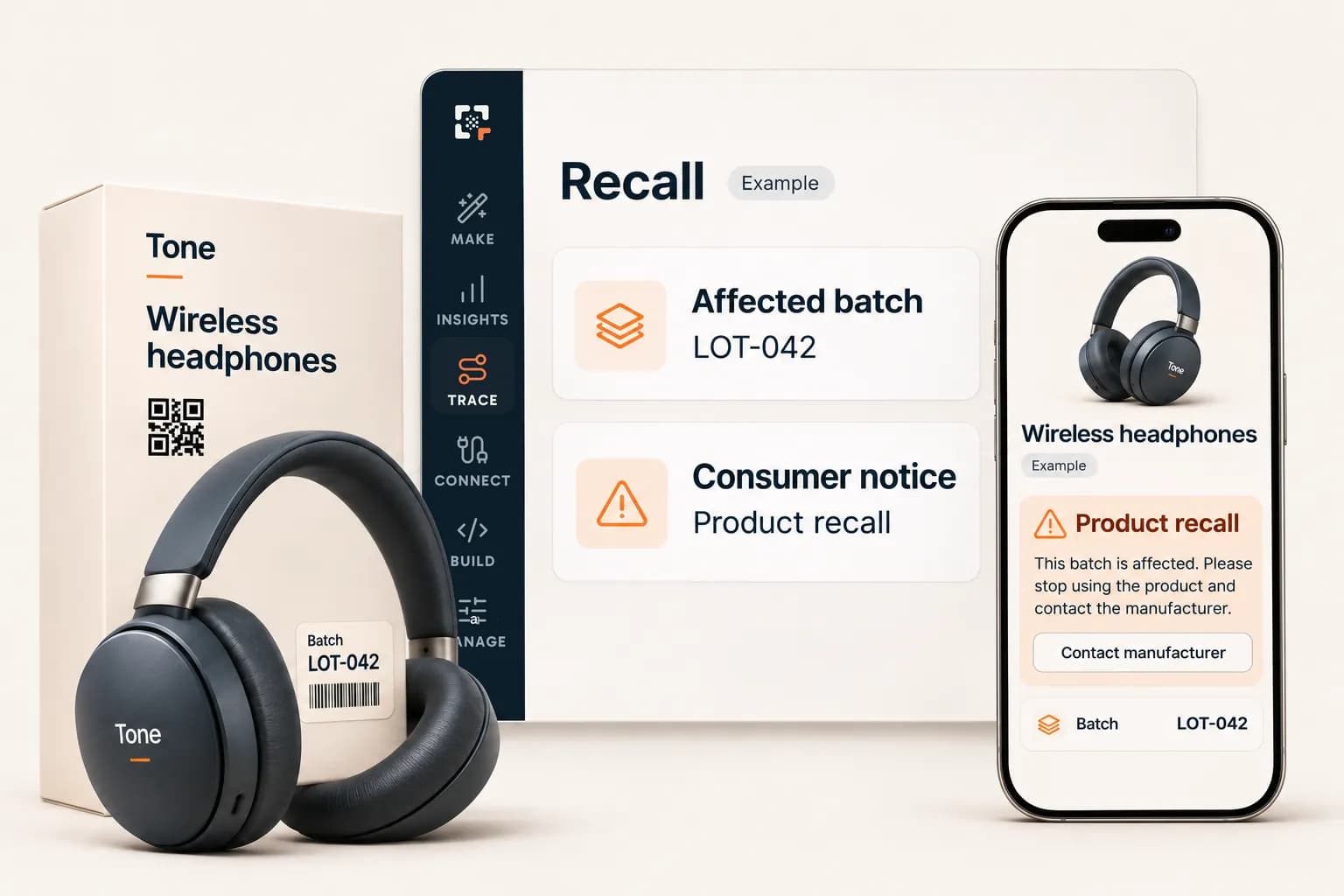
- Recalls: start a recall and affected products show a warning on their page.
- Hosted in the EU, on our own servers.
Fields that use ESPR terminology, such as the repairability score, durability and recycled-content claims, are a working set. We will check them against the final delegated act when it is adopted.
What we are building
Circularity actions Roadmap
- Repair and spare-parts card on the passport.
- Return-and-recycle card on the passport.
- Lifecycle events recorded by professionals with a PIN.
- Ownership transfer for second-hand products.
How it works
- Choose the electronics pack for your product line.
- Add your products. One by one, or import them from a CSV or Excel file.
- Fill in the data you hold today and see which fields are still missing.
- Attach your evidence: declarations of conformity and test reports.
- Review and publish. The checks run, then the passport goes live behind your QR code.
- Update any time. Change the data and the code on the product stays the same.
Next step
If you want to see how far your current product data gets you, check your readiness or book a consultation. We will look at one product line and show you what you can set up now.