Questa pagina non è ancora disponibile in italiano, quindi viene visualizzata in inglese.
Battery passports, built from your Annex XIII data
From 18 February 2027, EV and LMT batteries, and industrial batteries above 2 kWh, need a battery passport. Start with one product line in a paid, sales-led pilot.
Battery DPP pilot
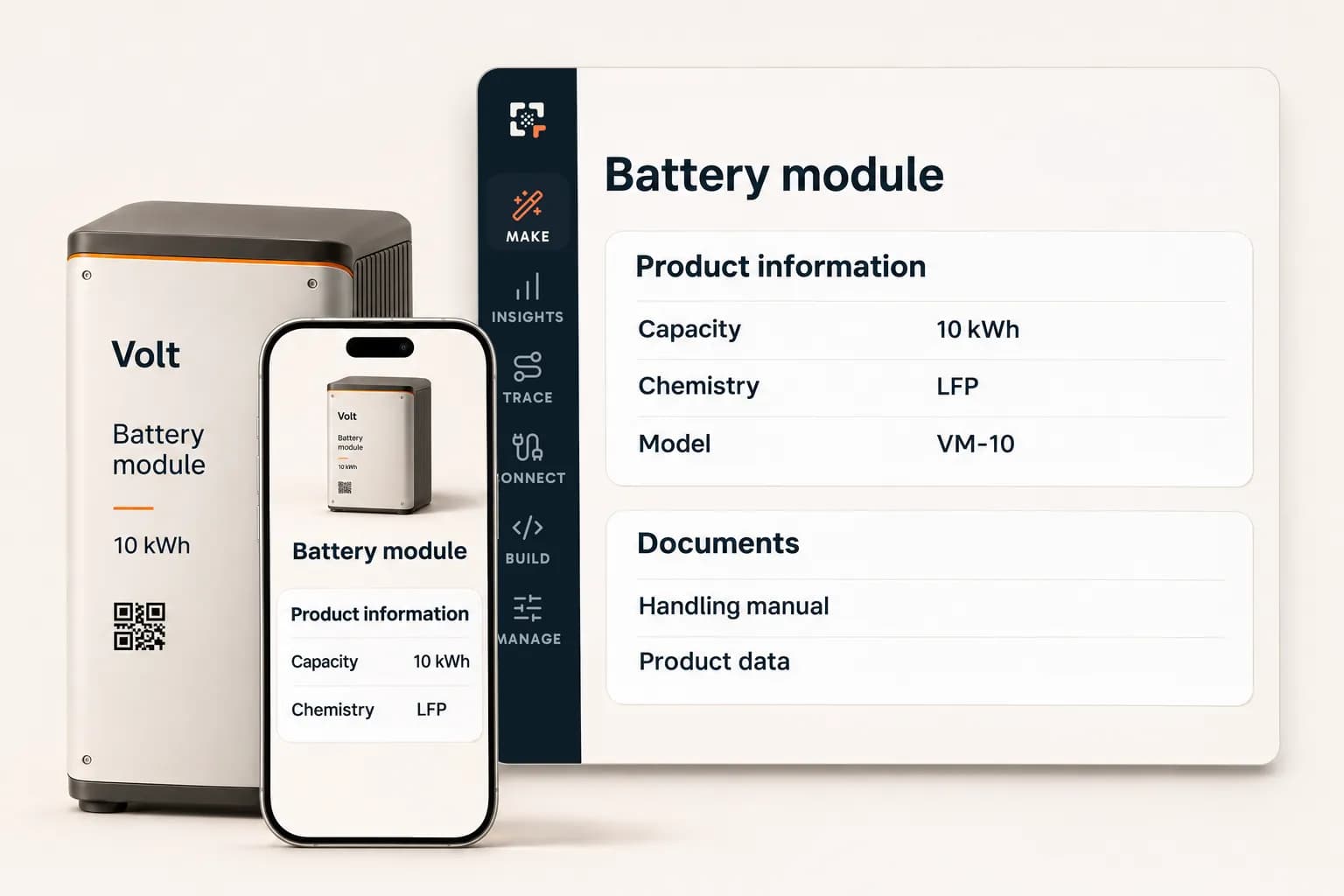
A paid, sales-led pilot for one product line: data mapping, working passport records, a readiness gap report and 12 months of platform access.
Annex XIII data fields
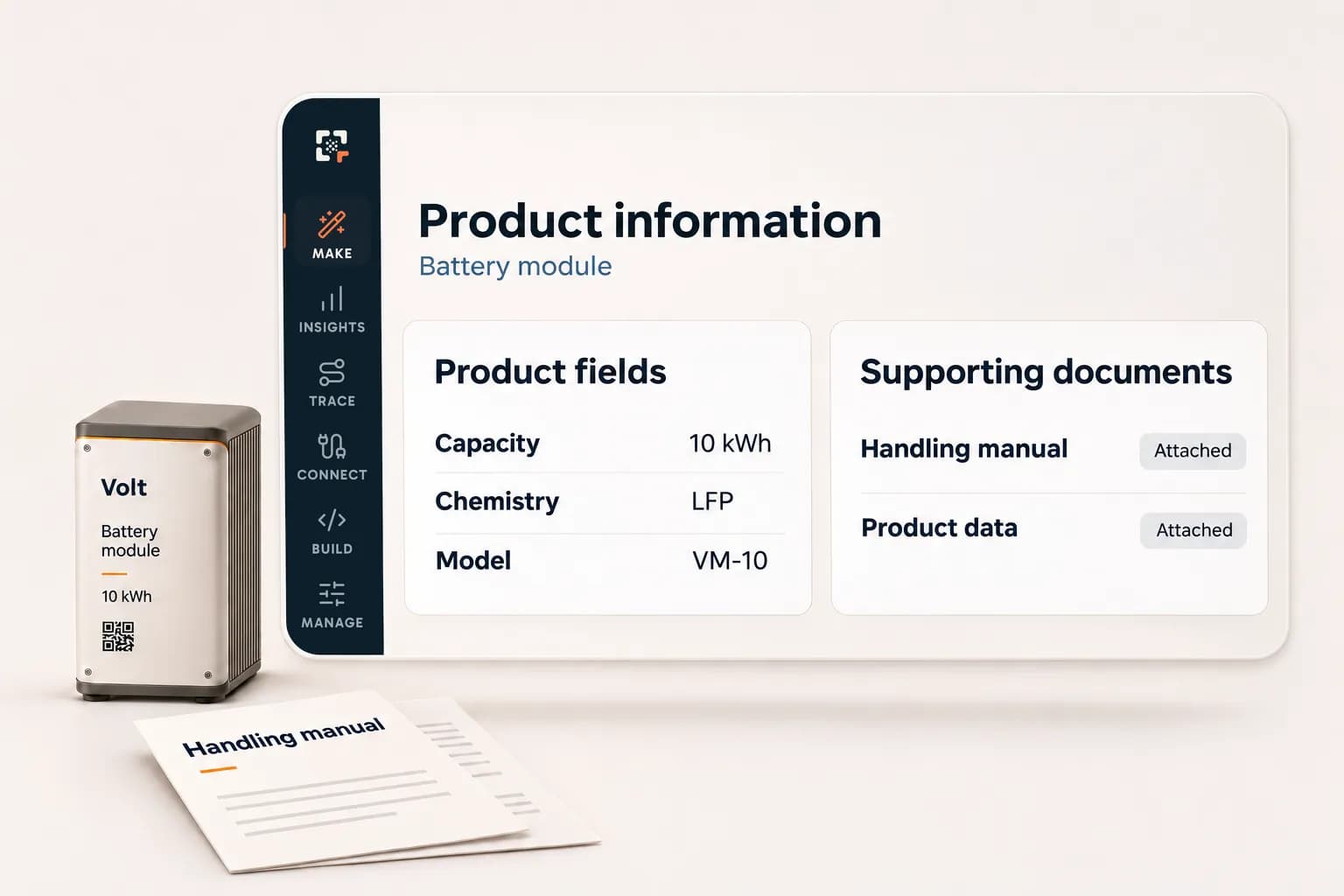
A battery schema for identification, capacity and voltage, carbon footprint, recycled content, durability, substances of concern, due diligence and end of life.
GS1 Digital Link QR codes
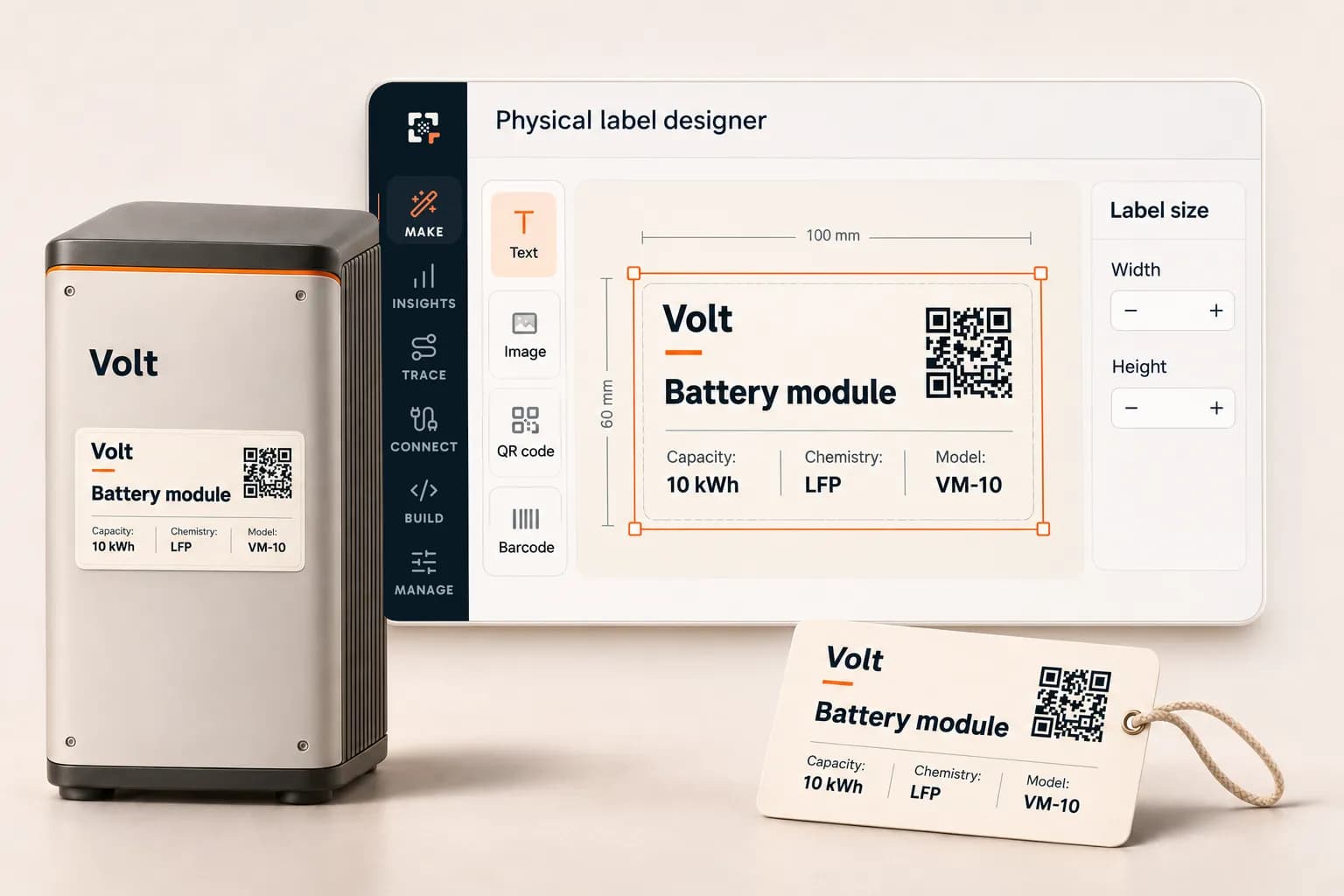
Each passport gets a GS1 Digital Link-compatible QR code. People get a readable page; software asking the same URL gets JSON-LD.
Evidence vault and handler PIN
Keep test reports, declarations and certificates with the battery. Staff and handlers see restricted data after entering a PIN.
Role-based access tiers
Separate views for the public, for persons with a legitimate interest and for authorities, following Article 77 and Annex XIII.
EU registry submission and backup
Submission of identifiers to the EU registry, signed codes and a backup copy of each passport at a second origin.
Who this is for
This page is for teams that place batteries on the EU market: battery manufacturers, importers, industrial and LMT battery suppliers, EV battery actors, and the repair, second-life and recycling businesses that work with their data. If you advise or integrate for battery makers, see the partner programme.
What the regulation asks
The EU Batteries Regulation, Regulation (EU) 2023/1542, sets out the battery passport in Article 77. The main points:
- Scope and date. From 18 February 2027, each LMT battery, each industrial battery with a capacity above 2 kWh and each electric vehicle battery placed on the market or put into service must have an electronic record: the battery passport.
- Three audiences. Some information is public. Some is only for notified bodies, market surveillance authorities and the Commission. Some is only for persons with a legitimate interest, such as repairers, remanufacturers, second-life operators and recyclers.
- QR code and identifier. The passport is reached through a QR code that links to a unique identifier. Both must follow the ISO/IEC 15459 series or an equivalent.
- Second life. A repurposed or remanufactured battery gets a new passport, linked to the passport of the original battery.
- Continuity. The passport must stay available even if the operator responsible for it stops trading in the EU.
A 2025 amendment, Regulation (EU) 2025/1561, moved the supply-chain due diligence obligations to 18 August 2027. It did not move the passport date.
This is a summary, not legal advice. What applies to you depends on your battery category, your role and the implementing rules. See the regulations timeline.
The hard part is the data
A QR code is easy. The work is in the data behind it: which fields are public, which are restricted, which identifiers connect the battery to its passport, which evidence supports each claim, and which supplier data is still missing. Most teams find the gaps only when they try to fill in a real passport. That is why we start with a pilot on one product line.
What QRabl does
Live
- The battery schema. Fields for battery category and chemistry, serial and batch numbers, manufacturer and place of manufacture, rated capacity and voltage, carbon footprint and class, recycled cobalt, lithium, nickel and lead, expected lifetime and state of health, substances of concern, due diligence documents, and collection and recycling information.
- Review before publishing. QRabl checks a battery passport against the required fields before it goes live and shows you what is missing.
- One code, three views. The Label, the Experience view with your brand story and the Passport view with the structured data. Restricted fields are not shown on the public pages.
- Handler access by PIN. Your staff and handlers enter a PIN to see restricted information.
- GS1 Digital Link-compatible QR codes and short links, with machine-readable JSON-LD at the same URL. See the resolver engine.
- Evidence vault. Store test reports, declarations of conformity and certificates with the product. See the compliance vault.
- Data in, data out. Import products from CSV or Excel files, or send updates such as state-of-health readings through the REST API.
- Hosted in the EU, on our own servers.
More features
- Role-based access tiers — separate views for legitimate-interest users and for authorities, beyond the PIN. See role access.
- EU registry submission — sending your battery identifiers to the EU registry.
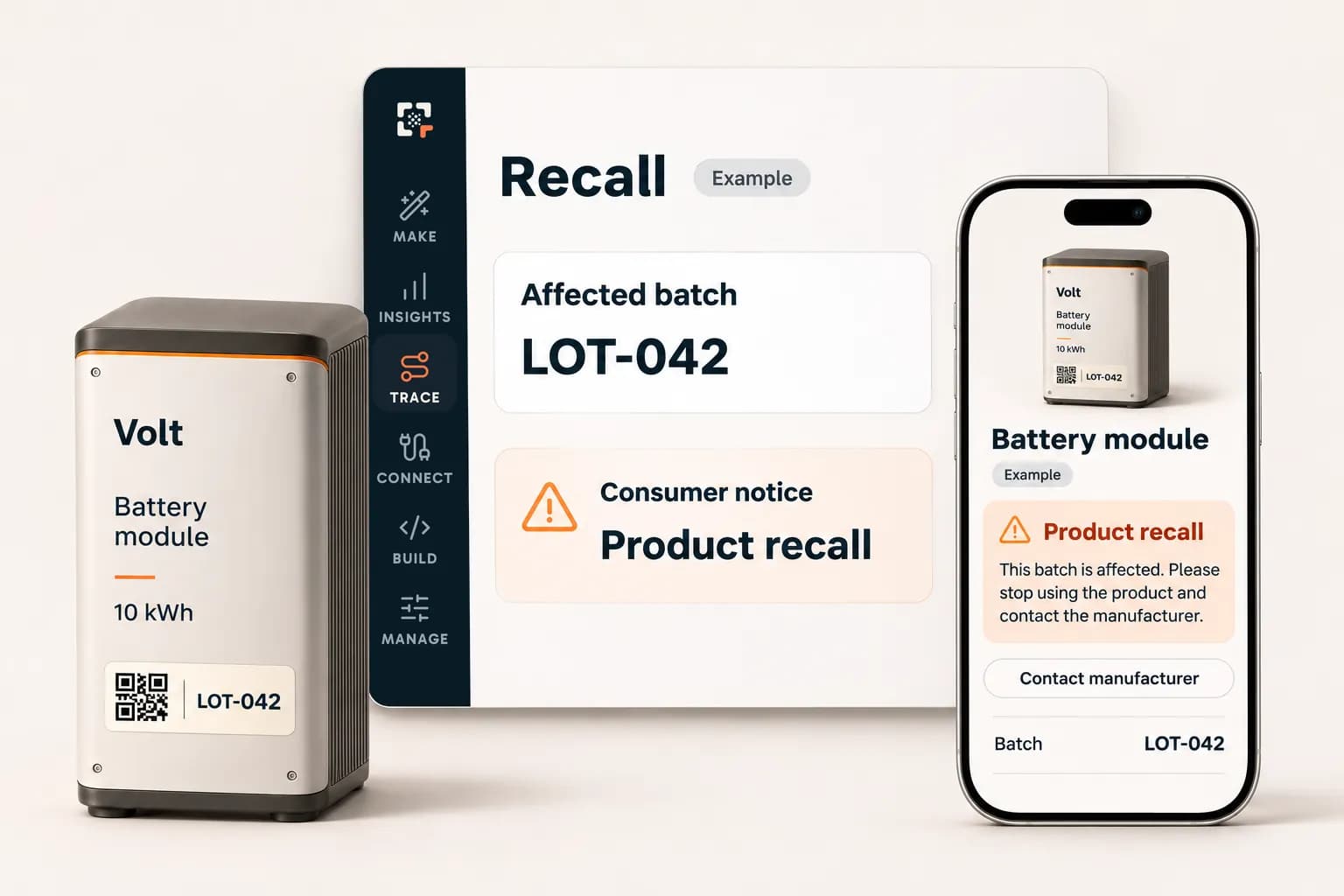
- Signed QR codes and serial numbers — codes that can be checked for authenticity.
- Batch and serial numbering at scale — a passport for every individual battery, created in volume.
- Backup copy at a second origin and provider continuity, so a passport outlives a change of provider.
Battery DPP Pilot Plus
Launch a QR-accessible battery DPP pilot for one product line, map your Annex XIII readiness gaps, and keep building on QRabl with 12 months of DPP tier platform access.
What you get:
- A working QR-accessible battery passport environment.
- A mapped battery DPP data structure.
- A clear view of missing data and evidence gaps.
- Public and restricted views for different audiences.
- A repeatable workflow for additional product lines.
- 12 months of platform access to continue building.
See the Battery DPP Pilot Plus page for the details and to book a DPP readiness call. The page is in English.
How the pilot works
The Battery DPP pilot is a paid, sales-led service for one battery product line.
- Scoping call. A 30-minute call to agree the product line, scope, timeline and price.
- Readiness workshop. We map your data to the Annex XIII structure and mark what is public and what is restricted.
- Working passports. You get QR-accessible passport records with public and restricted layers, and your evidence attached.
- Gap report. A readiness gap report shows which data and evidence are still missing.
- Keep building. Twelve months of QRabl platform access to add more product lines with the same workflow.
At the end, your team has a working battery passport, a mapped data structure and a clear list of what to collect before 18 February 2027.
Next step
Book a Battery DPP call to scope your pilot. If you want to talk about a wider rollout or an integration first, book a consultation.