Tämä sivu ei ole vielä saatavilla sinun kielessäsi, joten se näytetään englanniksi.
Connect your systems to your product passports
A REST API with API keys, an OpenAPI specification, and passports that machines can read as JSON-LD. Ask for a sandbox and build your integration with test data.
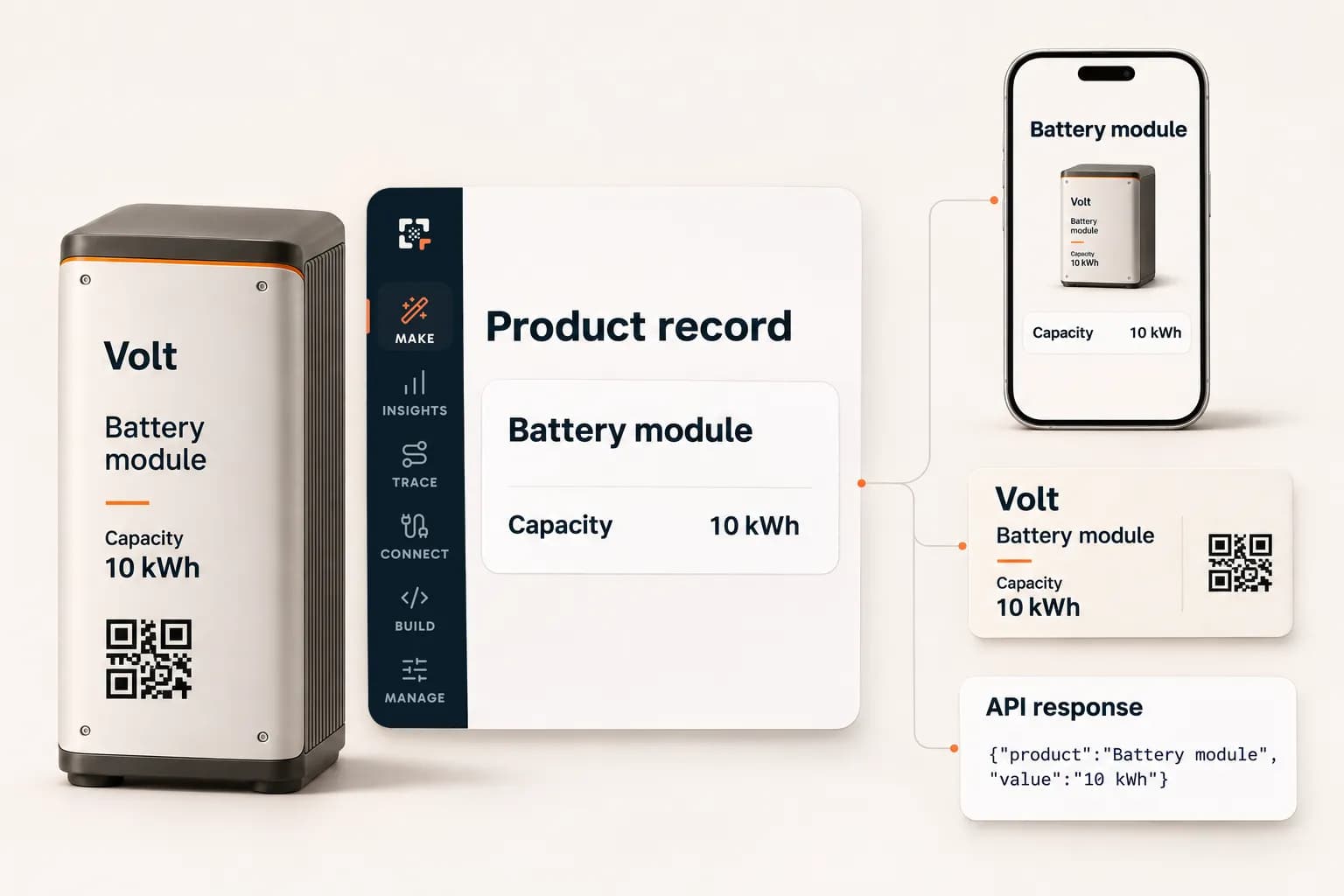
REST API with API keys
Create workspace API keys with read, write or admin rights and manage products, labels and QR codes from your own systems.
OpenAPI specification
Every public endpoint is described in an OpenAPI 3.1 document you can load into your API client or code generator.
Passports as JSON-LD
Machines that ask for JSON-LD get structured passport data. A browser at the same address gets the label page.
Recall status for machines
Each product has a public recall status in JSON-LD, linked from its GS1 Digital Link address.
EPCIS 2.0 events
Capture and query commissioning, shipping, receiving and aggregation events for your batches and serials.
Webhooks
Signed notifications to your own systems when a passport is published or a recall starts.
Sandbox on request
Partners and integrators get a sandbox workspace after signing an NDA.
Instant sandbox
RoadmapCreate your own sandbox workspace and test key, without waiting for us to set it up.
Who this is for
Integrators who connect ERP and PIM systems, label printers, consultancies running client projects, and brand IT teams who would rather push product data than type it. If you want to sell QRabl to your own clients, start with the partner programme.
What you can use
REST API with API keys
Workspace owners and admins create API keys in the dashboard. Each key belongs to one workspace and carries read, write or admin permission. You send it as a Bearer token, and every endpoint sits under /api/v1. Requests and responses are JSON. API keys come with the Professional plan and above — see pricing.
OpenAPI specification
The whole public API is described in one OpenAPI 3.1 document. Browse it on the API reference page, or load it into your own tools.
Passports as JSON-LD
Every published passport has a machine-readable form. The GS1 Digital Link address in the QR code sends people to the label page. For machines, it points to the passport and the recall status in JSON-LD, through response headers and a GS1 linkset. The passport endpoint uses content negotiation: ask for application/ld+json and you get structured data, open it in a browser and you land on the label page. Public passport data needs no API key.
What we are building
EPCIS 2.0 events
Supply-chain events in the GS1 standard format, recorded against your batches and serials. Read how events and identifiers fit together on EPCIS 2.0 and webhooks.
Webhooks
Signed HTTP notifications for passport and recall events, so your systems react without polling.
Try it in a sandbox
Sandbox access is on request today. Apply through the partner application, sign an NDA, and we set up a sandbox workspace for you. Self-service sandbox provisioning Roadmap lets you start without that step. See Sandbox access for what you can test.