Ši puslapis dar nėra jūsų kalba, todėl rodomas anglų kalba.
EU passport and e-label rules, explained plainly
Find out which rules apply to your products, when they start and what to prepare. For brands, printers and the consultants who advise them.
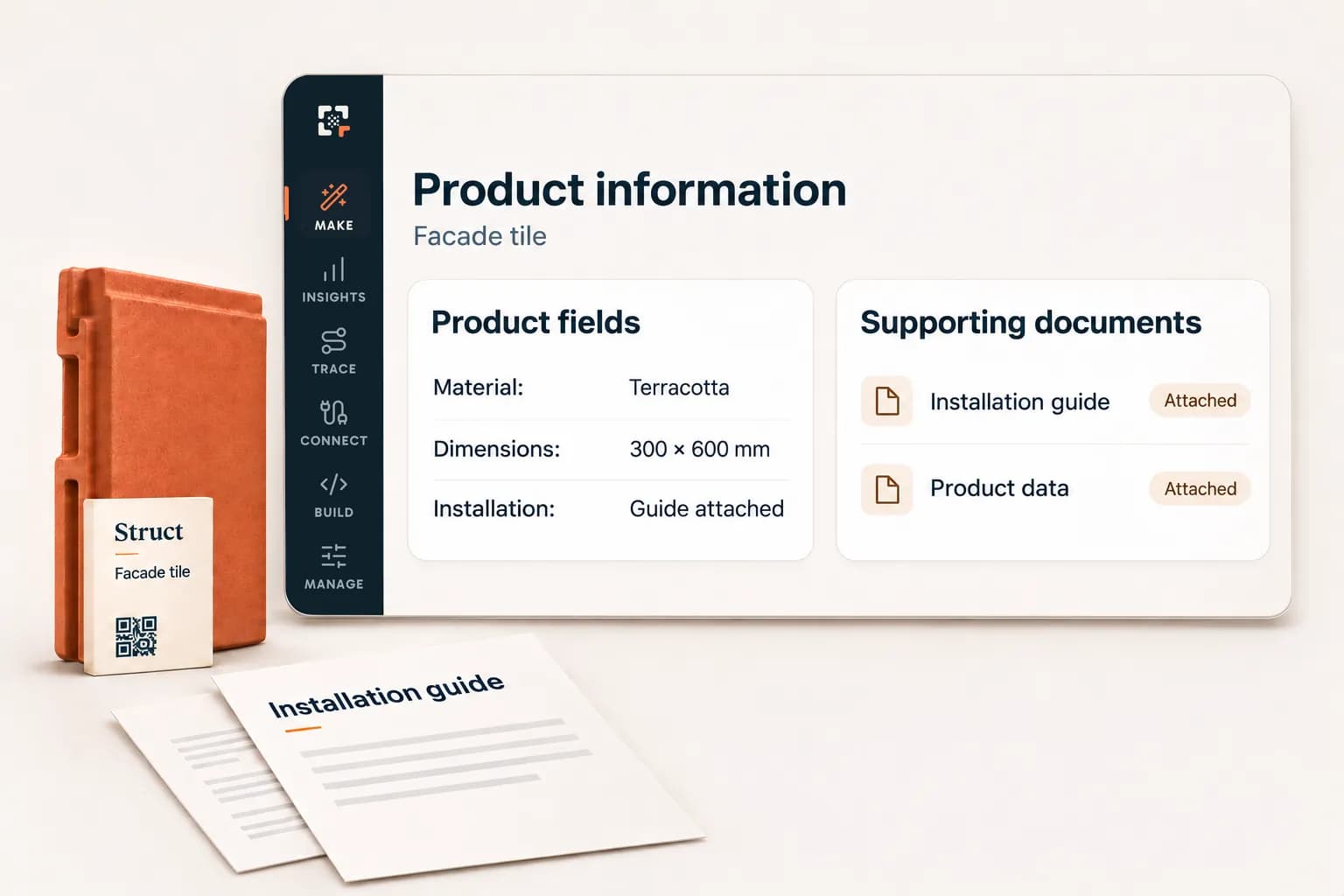
Rules arrive one product group at a time
There is no single EU deadline for product passports. Each product group gets its own rules and its own start date. Batteries come first: from 18 February 2027, electric vehicle batteries, batteries for light means of transport such as e-bikes, and industrial batteries over 2 kWh need a battery passport. Iron and steel, textiles, construction products, detergents and toys follow on their own timelines. Wine has had its own e-label rules since December 2023.
This hub helps you work out where your products stand and what to do first.
Readiness check
Answer five questions: your sector, how you track products, where your product data lives, whether you are a brand or work for brands, and where you sell. A summary appears on screen straight away, with the rules that apply, their status and the key dates. A downloadable PDF report Roadmap, with a step-by-step plan, builds on the same answers.
Regulation timeline
The EU dates that matter for passports and digital labels, on one page: the Ecodesign for Sustainable Products Regulation (ESPR), the EU passport registry, batteries, construction products, textiles, toys, detergents, wine, and GS1's target for 2D barcodes at the till. Each row says whether a rule is in force, adopted with a start date, or still expected. We review the page regularly.
GS1 Digital Link primer
The QR code that opens a passport is usually a web address built with the GS1 Digital Link standard. The primer explains how that address is made from your GTIN, batch and serial number, how one code serves both shoppers and systems, and what brands and printers need before the first print run.
News and articles
For news on the rules and practical articles, read the blog.
What these pages are, and what they are not
These pages explain the rules and how QRabl supports them. They are not legal advice. Formal conformity assessment stays with you and, where your sector requires one, a notified body. Food and feed are outside the ESPR passport rules; wine e-labels follow EU wine law.
Want to talk it through? Book a consultation. Consultancies and printers who advise brands can become a partner.