Ši puslapis dar nėra jūsų kalba, todėl rodomas anglų kalba.
Textile passports: prepare your data now
The ESPR rules for textiles are not adopted yet. The data they are expected to ask for takes time to collect from suppliers, so you can start structuring it now.
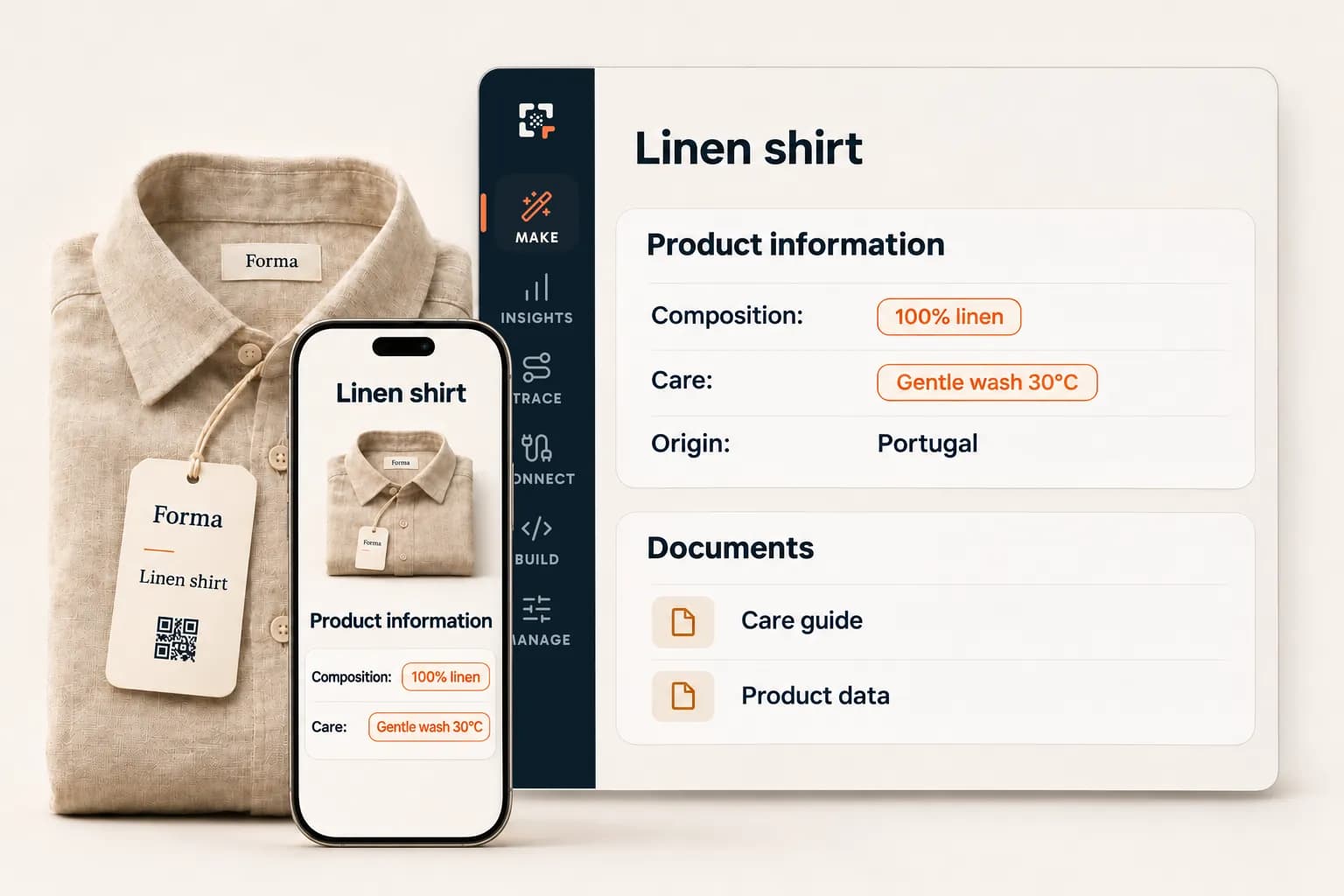
Textile data schema
A field set for fibre composition, production country and facility, durability, repairability, recycled content, care symbols, substances of concern and certificates.
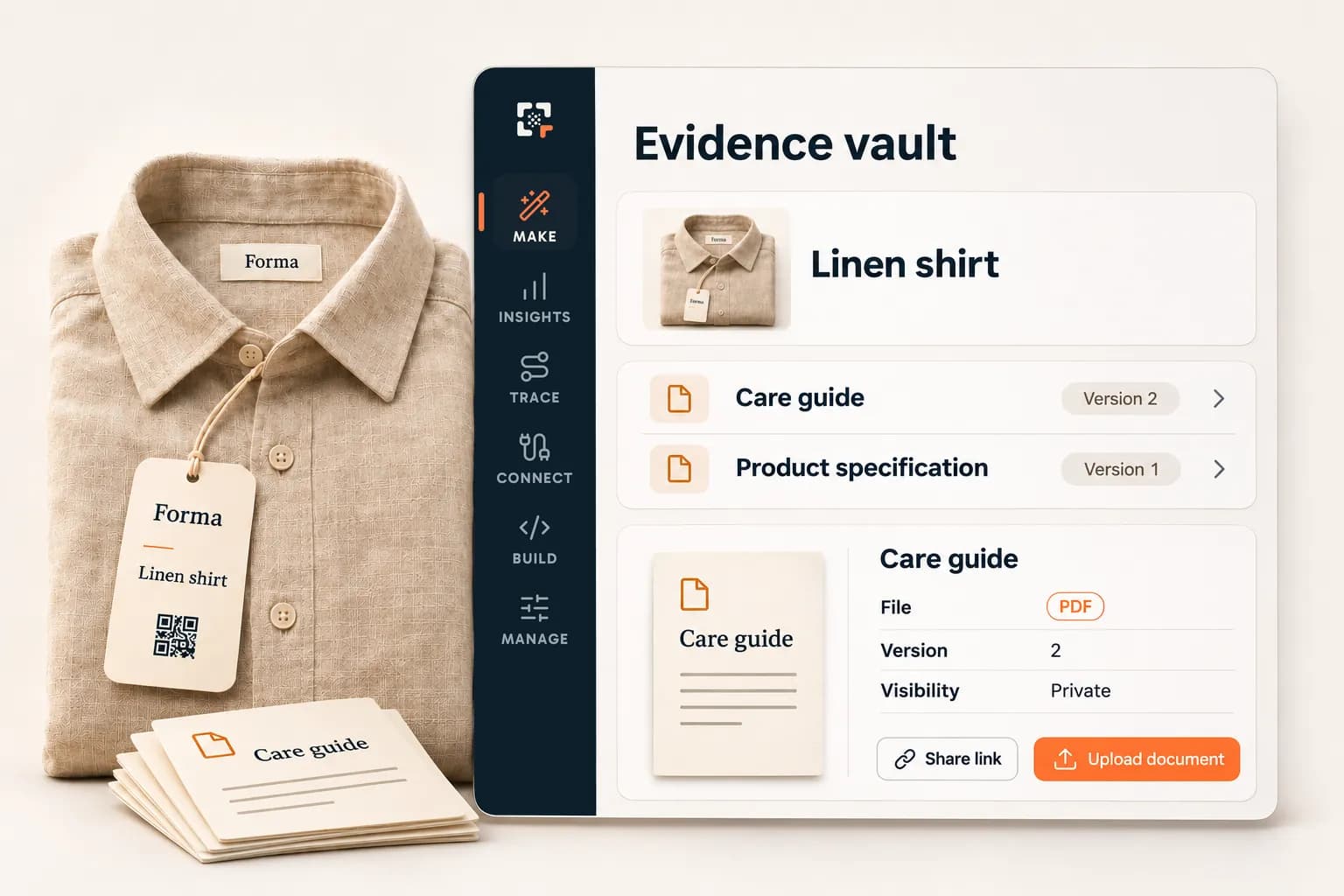
Certificates in the evidence vault
Keep certificates, test reports and supplier declarations with each product, ready for when the rules ask for them.
Import from your spreadsheets
Bring product and composition data in from CSV or Excel files instead of typing it in again.
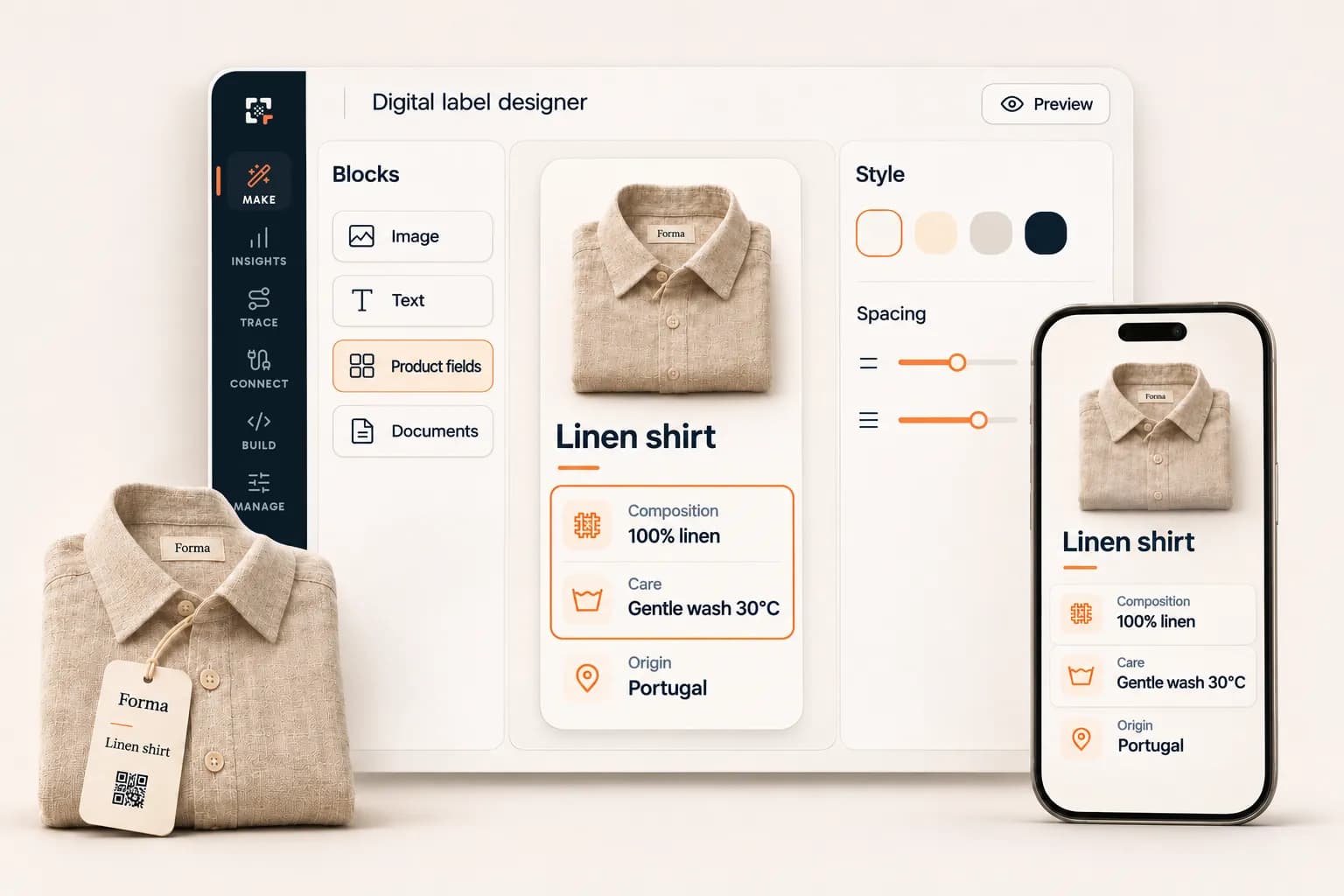
A digital label behind one QR code
Publish composition, care and repair information on a label page in your shopper's language, with a GS1 Digital Link-compatible QR code.
Full textile passport
A passport aligned with the final delegated act, with views for consumers, repairers, recyclers and authorities.
Supplier workspaces and lineage
Suppliers add their own data and certificates, and EPCIS 2.0 events trace each step of the supply chain.
Who this is for
This page is for apparel and textile brands, private-label retailers and their manufacturers who sell in the EU, and for the consultancies that help them. If you advise fashion brands on compliance, see the partner programme.
Where the law stands
The Ecodesign for Sustainable Products Regulation (ESPR), Regulation (EU) 2024/1781, entered into force on 18 July 2024. It sets up the EU Digital Product Passport, but it does not say what a textile passport must contain. That comes in a separate delegated act for textiles.
That delegated act has not been adopted. Here is what is known:
- The Commission's ESPR working plan for 2025–2030, adopted on 16 April 2025, names textiles, with a focus on apparel, as a priority product group.
- The Commission's own Digital Product Passport page lists the fourth quarter of 2027 as the planned adoption of the textile delegated act, and says timelines may change.
- As a rule, ESPR requirements apply no earlier than 18 months after a delegated act enters into force, unless there is a justified reason for a shorter period.
So there is no textile passport obligation yet, and no final field list. Any list you see is a draft or an estimate.
Two textile rules apply now. Since 19 July 2026, the ESPR bans large companies from destroying unsold apparel, clothing accessories and footwear. Medium-sized companies follow from 19 July 2030. And the Textile Labelling Regulation, Regulation (EU) No 1007/2011, requires fibre composition on the label.
Follow the dates on our regulations timeline. This page is a summary, not legal advice.
The data you can expect to need
The final list will be set by the delegated act. Based on the ESPR itself, the Commission's textile passport page and a 2026 study for the Commission's Joint Research Centre, these are the data areas you can expect. The JRC study says it does not necessarily reflect the Commission's position, so treat this as a direction, not the legal text:
- Composition — fibres and their shares, linked to the textile labelling rules.
- Origin — where the product was made, and which companies were involved.
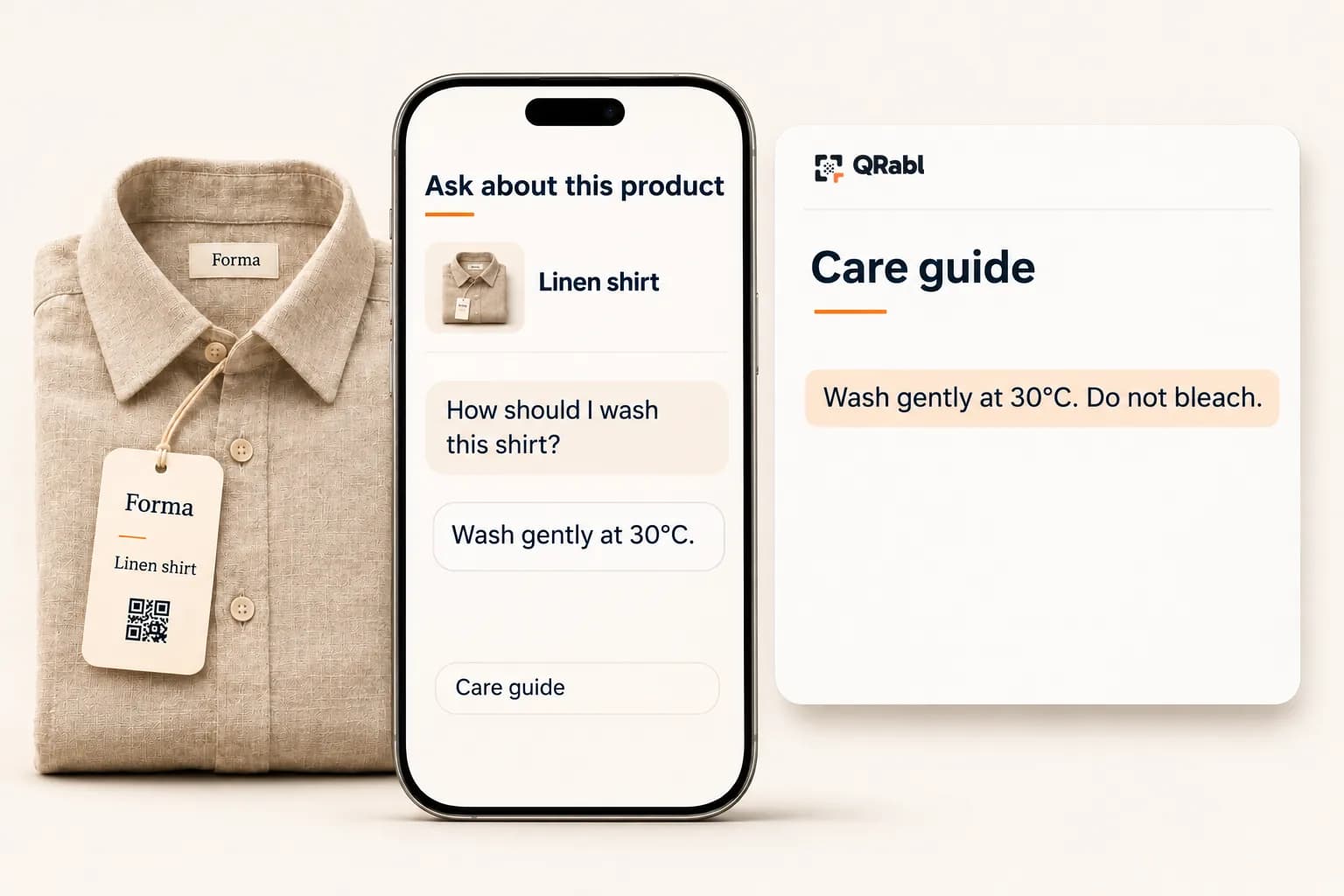
- Use, care and repair — care instructions and information that supports repair and maintenance.
- Recycled content — the ESPR names recycled content as one of the parameters requirements can be based on.
- Substances of concern — the ESPR says information requirements must make it possible to track them through the product's life, with limited exceptions.
- Certificates and compliance documents — declarations of conformity, test reports and certificates.
- End of life — information for reuse, resale, disassembly and recycling.
- Identifiers — a unique product identifier and, where relevant, a GTIN.
Most of this sits with your suppliers, not in your own systems. Collecting it, checking it and keeping it current is the slow part. Starting now gives you time to find the gaps.
What QRabl does
Live
- The textile data schema. Fields for fibre composition with origin and organic share, production country and facility, durability and pilling resistance, repairability, recycled content, end-of-life instructions, substances of concern, certificates, ISO 3758 care symbols, size and supply-chain links. Add custom fields for anything else you track.
- A readiness check, not a block. Because the textile rules are still a draft, QRabl shows which textile fields are still empty as a warning. It does not stop you publishing.
- Evidence vault. Store certificates, test reports and supplier declarations with the product. See the compliance vault.
- Import product data from CSV or Excel files.
- Digital label and Passport view. One GS1 Digital Link-compatible QR code opens the brand story in the Experience view and the structured data in the Passport view, translated into your shopper's language.
- Hosted in the EU, on our own servers.
When the delegated act is adopted, we update the textile schema to match. You keep your data; you fill in what is new.
More features
- The full textile passport, aligned with the final delegated act.
- Role-based views for repairers, recyclers and authorities — see role access.
- Supplier workspaces, so suppliers enter their own data and upload their own certificates.
- EPCIS 2.0 events and supply-chain lineage — see EPCIS traceability.
- ERP and PIM connectors Roadmap for your product information system.
How to start
- Pick one collection or product line. A small scope shows you quickly where the gaps are.
- Import what you have. Composition, origin and care data from your existing spreadsheets.
- Ask suppliers for the rest. Attach their certificates and declarations in the evidence vault.
- Publish a digital label. Show composition, care and repair information to shoppers behind one QR code.
- Review the gaps. Use the readiness warnings to plan what to collect next.
Not sure where you stand? Try the readiness check, or book a consultation and we will look at your data with you.